
MarketMan sells procurement and inventory software to restaurant groups and hotels. iExcel built the growth system behind it — ABM paid social, a working Zoho stack, and honest attribution.
MarketMan's buyer isn't the diner, the host, or the front-of-house GM. It's the operator managing food cost — an executive chef, a purchasing director, a multi-unit ops leader, a hotel F&B controller. They think in COGS. They think in inventory variance. They evaluate software the way they evaluate a walk-in cooler: does it work under pressure, and can I trust the number it gives me?
Restaurant procurement doesn't move on a viral ad. It moves on the right message reaching the right operator, then a sales conversation clean enough to survive a busy Tuesday service. When iExcel came in, MarketMan had ads running, a Zoho stack live, and a growing pipeline — but the layers underneath weren't yet talking to each other in a way a CMO could report on with confidence.
The brief was straightforward. Build a demand engine that respects the buyer, source real leads from paid social ABM, and stand up the CRM plus reporting infrastructure that lets every dollar defend itself.

Restaurant procurement operators don't live in one channel. They're on LinkedIn during planning hours and in Meta feeds during downtime — and the ABM segments we cared about (regional restaurant groups, hotel F&B directors, multi-unit franchisees) sit inside both.
iExcel ran the two channels as a paired system. LinkedIn carried the named-account and role-based ABM audiences: purchasing directors, chef-owners, group ops. Meta carried the lookalike expansion and retargeting layer — same messaging spine, softer geometry, cheaper reach.
The paired system produced a compounding effect: LinkedIn drove named-account intent, Meta caught the lookalike expansion, and retargeting closed the loop. Cost-per-lead on the ABM segments landed materially below the platform's B2B SaaS benchmark — the number you get when the offer, form, and audience are actually calibrated to the operator's day. On the LinkedIn layer specifically, form opens converted into submitted leads at 17.7% — roughly 1.7x the ~10% Lead Gen Form completion-rate benchmark TheB2BHouse tracks across B2B advertisers.
Paid social ABM leads converted form opens into submitted leads at 17.7% — well above the ~10% Lead Gen Form completion-rate benchmark published by TheB2BHouse.
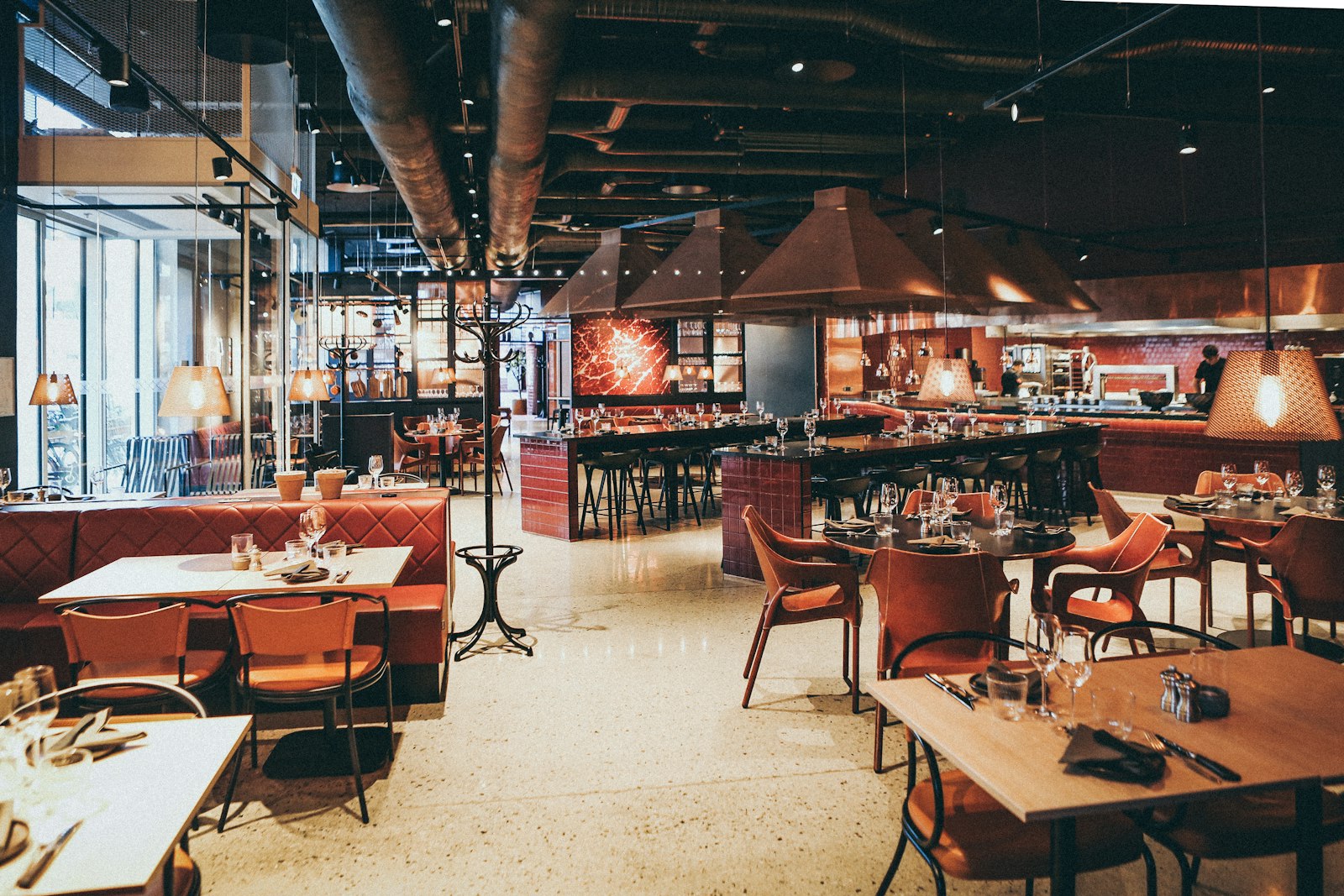
ABM only works when the segment is real. We didn't run a single "restaurant operator" audience — we ran four, each with its own creative, its own offer language, and its own lead-form wording. Same product, four cost centers, four buying committees.
Regional and national groups running 5–200+ units. Buyer is a director of purchasing or ops. Talks in COGS, variance, and rollups.
Full-service hotels and resorts with a multi-outlet F&B program. Buyer is a controller or F&B director. Cares about audit trail and PMS integration.
Franchise groups running multiple concepts. Buyer is a multi-unit operator wearing five hats. Cares about a simple standard everyone follows.
Regional QSR and casual chains scaling procurement discipline across geography. Buyer is a corporate purchasing lead. Cares about vendor consolidation.
Regional groups, hotel F&B, franchisees, and QSR chains — each with its own creative, offer language, and lead-form wording. Same product, four cost centers, four sales conversations.

"You aren't selling into a category. You're selling into a walk-in cooler, a P&L, and a purchasing director who's already got a spreadsheet that mostly works. Your ad has to earn the next click."
Zoho was already the system of record. What it wasn't yet was a growth engine sales trusted. Fields didn't map cleanly to the ABM segments. Campaign attribution wasn't wired to source. Nurture sequences existed but didn't reflect the four buyer types.
iExcel took the Zoho stack — Zoho CRM plus Zoho Campaigns — and turned it into infrastructure. Segment fields defined and enforced. Lead-source and UTM governance tightened so every LinkedIn ABM lead landed with a clean channel trail. Nurture streams rebuilt around the four operator types, so a hotel F&B controller didn't get the same email as a QSR corporate purchasing lead.
The normalization pass closed the gap on duplicate and unmatched records across the pipeline, and every reported lead landed with a defensible source, campaign, and segment tag. Every sales handoff carried the context the AE actually needed to run a good call.

A paid social lead is a name and an intent signal, not a sale. iExcel built the layer that turned raw LinkedIn and Meta leads into outreach a sales rep could actually run — personalized email copy, merge-field context pulled from the segment and ad creative, and sequence strategy tuned to each of the four operator types.
The first wave of personalized sequences opened at 60% — well clear of the roughly 36% average open rate Mailchimp tracks across its benchmarked campaigns. Zoho's engagement reporting layered on top surfaced which prospects were opening repeatedly, turning a raw send into a prioritization signal for the sales team instead of a one-way broadcast.
The initial wave of segment-aware sequences opened at 60%, roughly 1.6x the ~36% average open rate Mailchimp tracks across benchmarked email campaigns.
Every marketing team says they have reporting. Very few have reporting a CFO would sign off on. Before the rebuild, MarketMan's channel numbers, Zoho numbers, and demo numbers lived in three different tabs and told three slightly different stories.
iExcel stood up a Databox layer that pulled LinkedIn Ads, Meta, Zoho CRM, and Zoho Campaigns into one source of truth. Segment-level dashboards. Channel-to-lead-to-opportunity funnels. Weekly leadership rollups. The kind of reporting where the next question — which segment is compounding, and which one is stalling? — has an answer you can actually point at.
The attribution cleanup that happened alongside the Databox build wasn't a one-time audit. It was a governance layer: standardized UTMs, source hygiene inside Zoho, and campaign naming that survived a channel handoff without going stale.
A homepage CTA experiment inside the demo funnel tested competing call-to-action variants. The winning line clicked through at 1.55%, beating the next-best variant's 0.84% click-through rate by 85% — proof the copy test detailed next was worth running, not a one-off fluke.
A paid engine can only do so much if the landing experience wastes the click. iExcel ran a CRO pass across the primary demo funnel — heatmaps, form-completion analysis, headline testing, and message-market fit checks against the four ABM segments.
The experimentation roadmap prioritized what the analytics said mattered: a shorter, segment-aware demo form, tighter above-the-fold copy for the multi-unit operator, and a proof-point layer that spoke in COGS and inventory variance instead of generic SaaS platitudes. The form-field reduction alone lifted demo-request conversion by 22% against the funnel's own pre-test baseline — proof that a shorter ask beats a longer one once the traffic is already qualified.
Alongside CRO, we ran an SEO analysis of the resource surface — competitive gaps, keyword clusters worth owning, and technical fixes that had accumulated. The output wasn't a 200-page audit. It was a short list of pages worth writing next, ranked by intent-to-fit against the four ABM segments — the kind of roadmap a lean content team can actually execute against.
Form-field reduction testing lifted the primary demo-request conversion rate against the funnel's own historical baseline — the win you get from removing friction, not from buying more traffic.

Restaurant procurement SaaS doesn't win on a single hero channel. It wins because the layers underneath — the ad platforms, the CRM, the reporting layer, the funnel — all tell the same story about the same operator. iExcel ran the layers as one system.
Named-account and role-based targeting against four operator segments — purchasing directors, chef-owners, F&B controllers.
Lookalike expansion, retargeting, softer geometry for cost-efficient reach on the same segments.
Segment fields, lead-source governance, UTM discipline, sales-handoff context.
Four nurture streams — one per ABM segment. Same product, four voices.
Segment dashboards, channel-to-lead funnels, weekly leadership rollups, attribution truth layer.
Segment-aware collateral and outbound scaffolding — same message spine, right context per operator.
Heatmaps, form audit, headline testing, message-market fit against the four segments.
Competitive gap analysis, resource-cluster plan, technical fixes prioritized by intent.
Standardized naming, Zoho source hygiene, campaign taxonomy that survived a channel handoff.
"The engagement gave us a growth system, not a set of channels. Paid ABM, Zoho, and Databox all pointed at the same four operators — that's the read the leadership team could plan against."
For B2B SaaS leaders selling into operational buyers — restaurant procurement, hospitality ops, back-of-house systems — the MarketMan engagement is the template.
It's not the story of one hero channel. It's the story of an ABM engine calibrated to four operator segments, a Zoho stack turned into infrastructure, a Databox layer that made every reported number defensible, and a CRO + SEO layer that respected the click paid was already earning.
Back-of-house software doesn't sell itself. It sells to the operator who owns the P&L, in the language they use to think about it, through a funnel clean enough to survive the busy service. That's the system we built.
iExcel runs paid ABM, CRM implementation, attribution cleanup, reporting infrastructure, and the CRO layer that turns clicks into demos worth taking.
Book a 15-min sanity check →